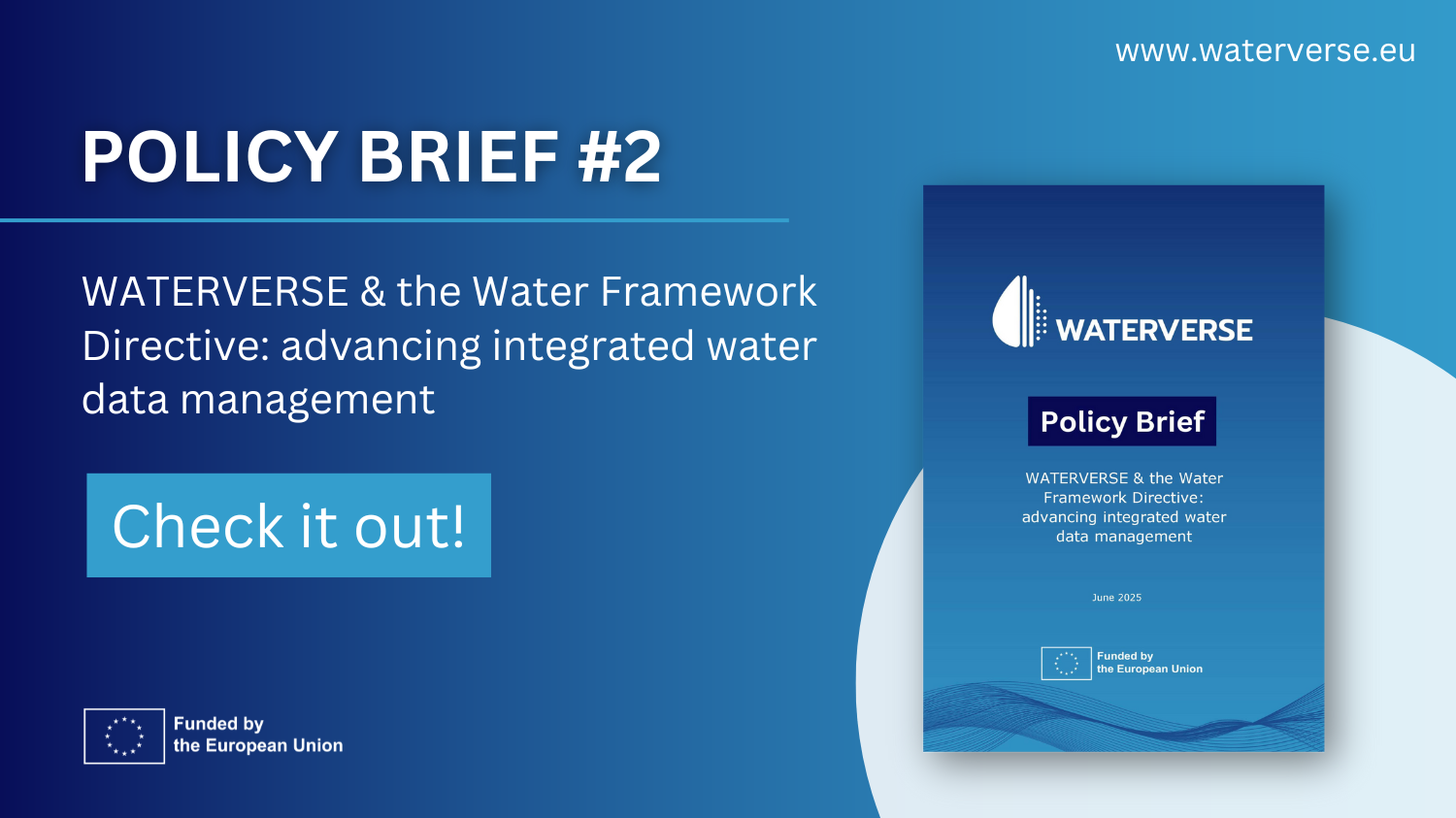
The WATERVERSE project released its second policy brief, titled “WATERVERSE & the Water Framework Directive: advancing integrated water data management.“ This critical document outlines how the project’s innovative Water Data Management Ecosystem (WDME) can directly address persistent gaps in the implementation of the EU Water Framework Directive (WFD), Europe’s cornerstone legislation for water resources.
For over two decades, the WFD has guided water management across the EU. However, recent reports from the European Environment Agency show that Europe is far from meeting its 2027 targets, with only 39.5% of surface waters achieving good ecological status. Barriers related to fragmented data, inconsistent monitoring, and a lack of digital harmonisation continue to hinder progress.
The new policy brief details how WATERVERSE tackles these challenges head-on. The project’s mission is to develop a WDME that makes water data accessible, affordable, secure, and FAIR (Findable, Accessible, Interoperable, Reusable). By blending the expertise of 17 partners across 10 EU countries, WATERVERSE is creating a holistic ecosystem to lower the entry barrier to data spaces, improve the usability of data, and ultimately enhance the resilience of water utilities.
The brief explains how the WDME directly addresses the monitoring, digital, and governance obstacles identified in the WFD’s latest implementation report. By providing integrated tools for the entire data lifecycle – from collection to visualisation – WATERVERSE enables the harmonised, high-quality data management needed for effective decision-making at local, national, and EU levels.
To accelerate the adoption of data-driven water governance, the policy brief puts forward four key recommendations for policymakers:
-
Integrate the WDME into National Systems: Encourage Member States to adopt WATERVERSE tools to harmonise data models and improve WFD compliance monitoring and reporting.
-
Standardise Data Practices: Promote the use of common standards, FAIR metrics, and Smart Data Models across the EU to ensure cross-border data interoperability.
-
Foster Stakeholder Engagement: Institutionalise multi-stakeholder forums to align data-driven innovation with local needs and regulatory targets, reinforcing citizen engagement.
-
Support Digital Capacity Building: Equip water authorities with the skills and infrastructure needed to operate advanced water management systems, expanding the EU Water Acquis to include digital governance.
As Europe faces increasing pressure on its water resources from climate change, initiatives like WATERVERSE are essential. By aligning with the WFD and the recently published EU Water Resilience Strategy, WATERVERSE is paving the way for a future where data empowers sustainable water management for all.
To learn more, download and read the full policy brief here.